
A bygone summer tale en route to the Dolomites
Written by Angie Stevens | October 23
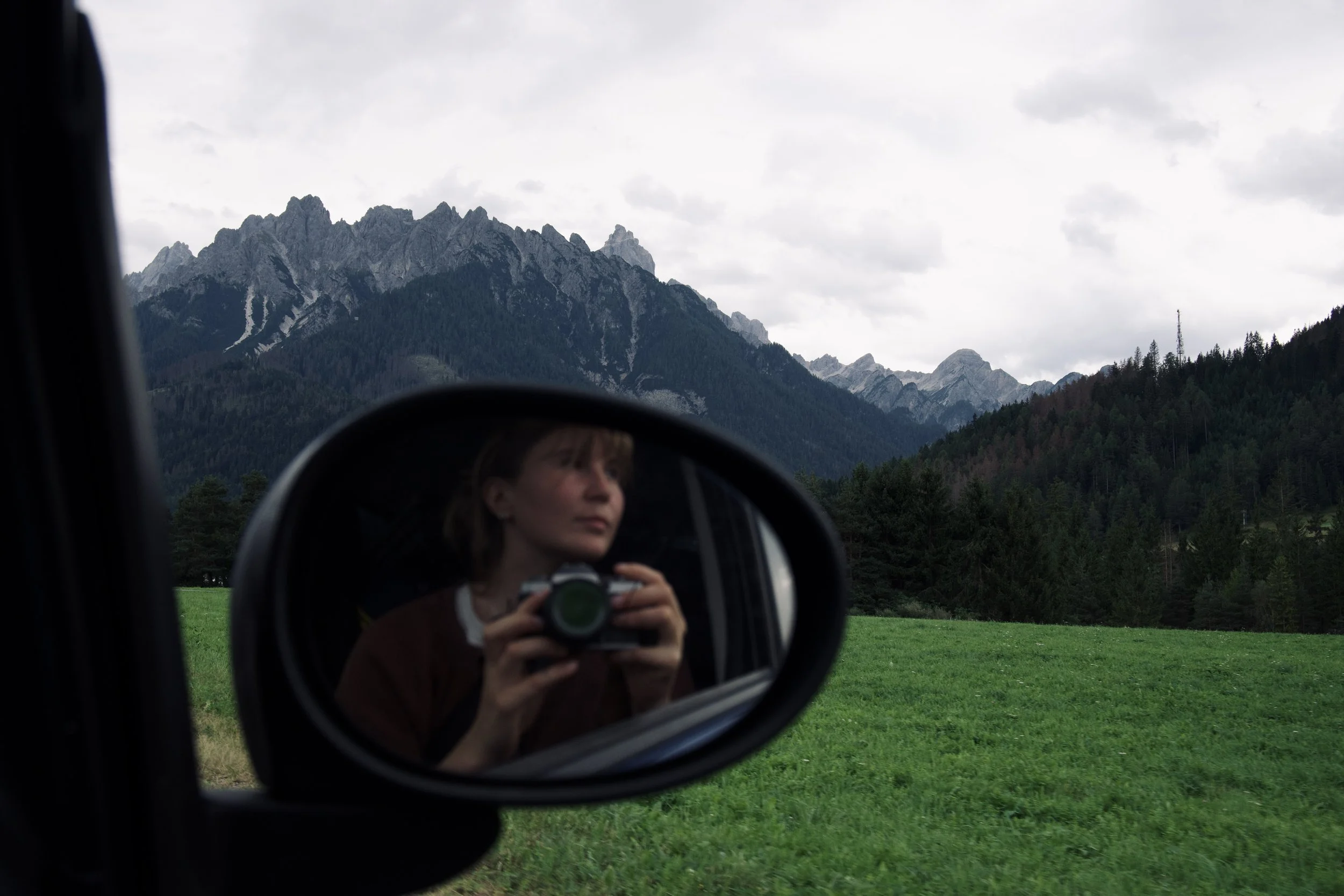
The day I learned how to drive stick shift along a German highway void of speed limits was the same overcast, late August afternoon that my Dutch friend and I were hours deep into our 15-hour journey from her apartment in The Hague to Italy and the country’s most revered Dolomites.
I’m quite glad I tackled stick when I did; I had already been traveling solo for a week—through hectic rush hour hoards, among central stations, unknown languages, and customs—and with each growing day moving through foreign places, I became increasingly receptive to more oncoming obstacles that were stranger to me, in a manner wholly different than when I’m situated at home in comfortable California.
Though stranger I was not to the mountains, or at least to that sense of solace the body retreats into when in the accompaniment of such breathtaking grandeur. And as for the perfect strangers—friends of Marjie’s—I would soon shake hands with in our shared spot in Cortina d’Ampezzo’s Camp Rochette: they, too, had distinct appetites for higher altitudes and turned to close acquaintances and climbing partners quite instantly.
/////
Cutting across Germany through Frankfurt and onto the border of Austria, the sun began its slow waltz towards the horizon, sending beams of light through the thick clouds. The view out the windshield appeared a painted landscape, with one fatal swoop of a paintbrush hurtling down to the lush green hills. Our route cascaded over a large swath of the country, appearing on the map to dip and fall straight down into the Alps.
The day began awaking dreary-eyed and groggy at 6 a.m. in Marjie’s apartment to a man and woman heckling outside the window, searching the dumpsters lining the sidewalk. It was trash day, and I mused at my inability to distinguish whether the duo was deep in argument or a shared search for morning treasure. Their thick Dutch accents meddled with the rain coursing down onto the pavement, and an hour later as the mini blue Toyota Aygo was packed to the brim, the steady downpour persisted and Marjie’s roommate wished us a good adventure, chuckling, then closing the door shut as to not let water pool in the hallway.
It was ten hours to Innsbruck, where we hoped to sleep for the night. I reveled in the thick trees bordering either side of the highway, and the slow progression of cars outfitted with black and yellow Dutch license plates soon shifting to a sea of white and blue German plates. We timed our bathroom breaks with the ever-abundant McDonald’s—many of which were situated on hills that I struggled to get the car up with my lacking manual abilities. More times than not, a driver hungry for their burgers and fries honked incessantly as Marjie and I worked together to get the car rolling again on the freeway onramp.
/////
The sun had arched into the mountains and Innsbruck lay another hour away. We found an empty site for the night in Nassereith, just off the 189, nestled near the Mieming Range and the Lechtal Alps. A game of backwards Tetris was played, pulling out our camping items from the stacked mass of belongings we managed to bring along our journey. In the dark night, my bare feet pitter pattered across the small wooden bridge connecting our site to the kitchen and bathrooms. The rushes of the Rosbach river occupied my dreams; we lay cuddled in the tent inches away from the water, and come morning, sat in the dewy patch of grass taking in the views afforded to us at first light.
Innsbruck opened up to us: We reveled in the pastel colors in the old stone town square, the religious icons and intricate paintings high above doorways and windows, the musicians busking, and the average temperament of tourists, elbowing their way through crowds.
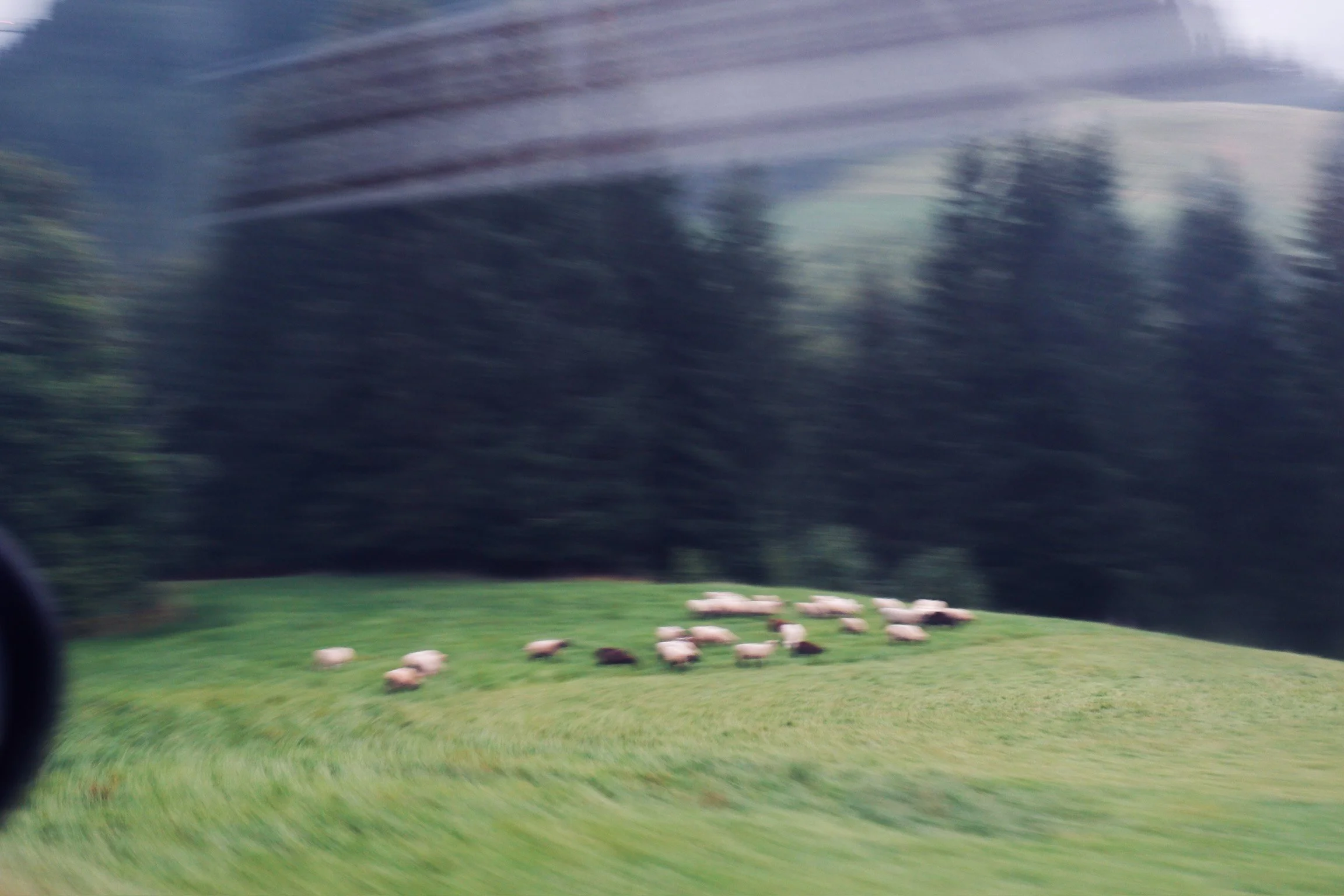
Across Brenner Pass and over the Alps, my body was glued to the passing scenes. There were the dairy cattle grazing in rich green valleys, the gondolas floating above the highway of cars, the ski resort at Mount Picco della Croce, and Forte di Fortezza—a fortress constructed in 1833 and abandoned five years later.
I caught the faces of panting bike packers as they tackled to ascend the windy mountain passes. I couldn’t help reveling in the beauty of taking the long way ‘round to some destination. Our journeys were distinctly different, though I found an underlying resemblance. In our case, to opt for a 15-hour car journey over a quick flight above the clouds meant our terminus was not isolated in place. We got to know our destination deeply by moving through its neighboring valleys; taking note of the mountains’ outlines softened by snow and gouged by avalanches; the scree fields akin to veins in the body; the spindly trees with bushy green tops where the sun hit them.
An old, big-bodied woman with an apron draped to her knees sat idly in front of a push cart brimming with golden potatoes. I so badly wanted to have captured a photo of her piercing face, though images like that linger so boldly in the mind there was no need.
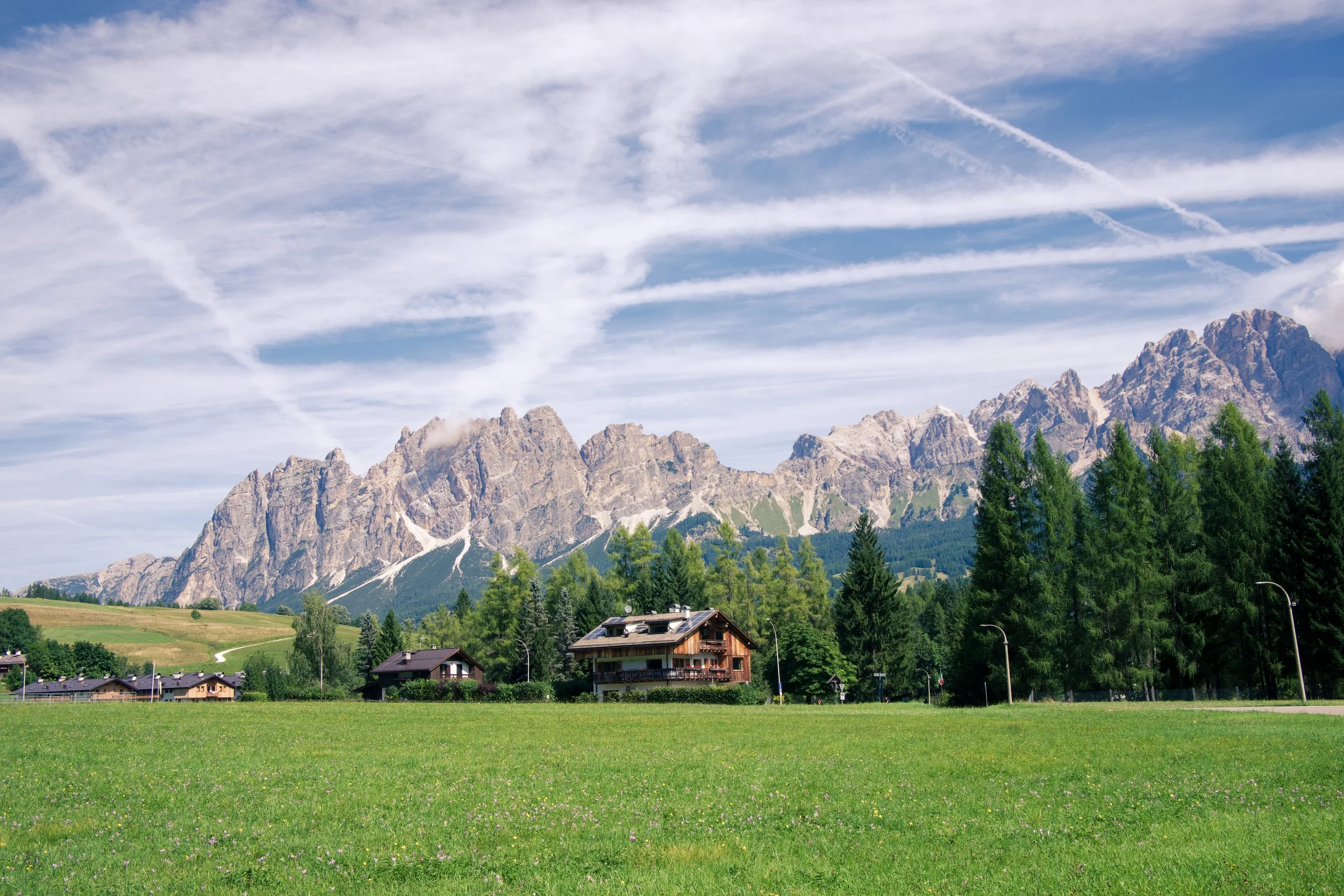
Croda Rossa d’Ampezzo, Tre Cime Nature Park, and Monte Cristallo were in view as we waded deeper into the mountains, on towards Cortina. Through town, the lodges had trailing geraniums displayed on every windowsill—rich pinks, reds, and purples.
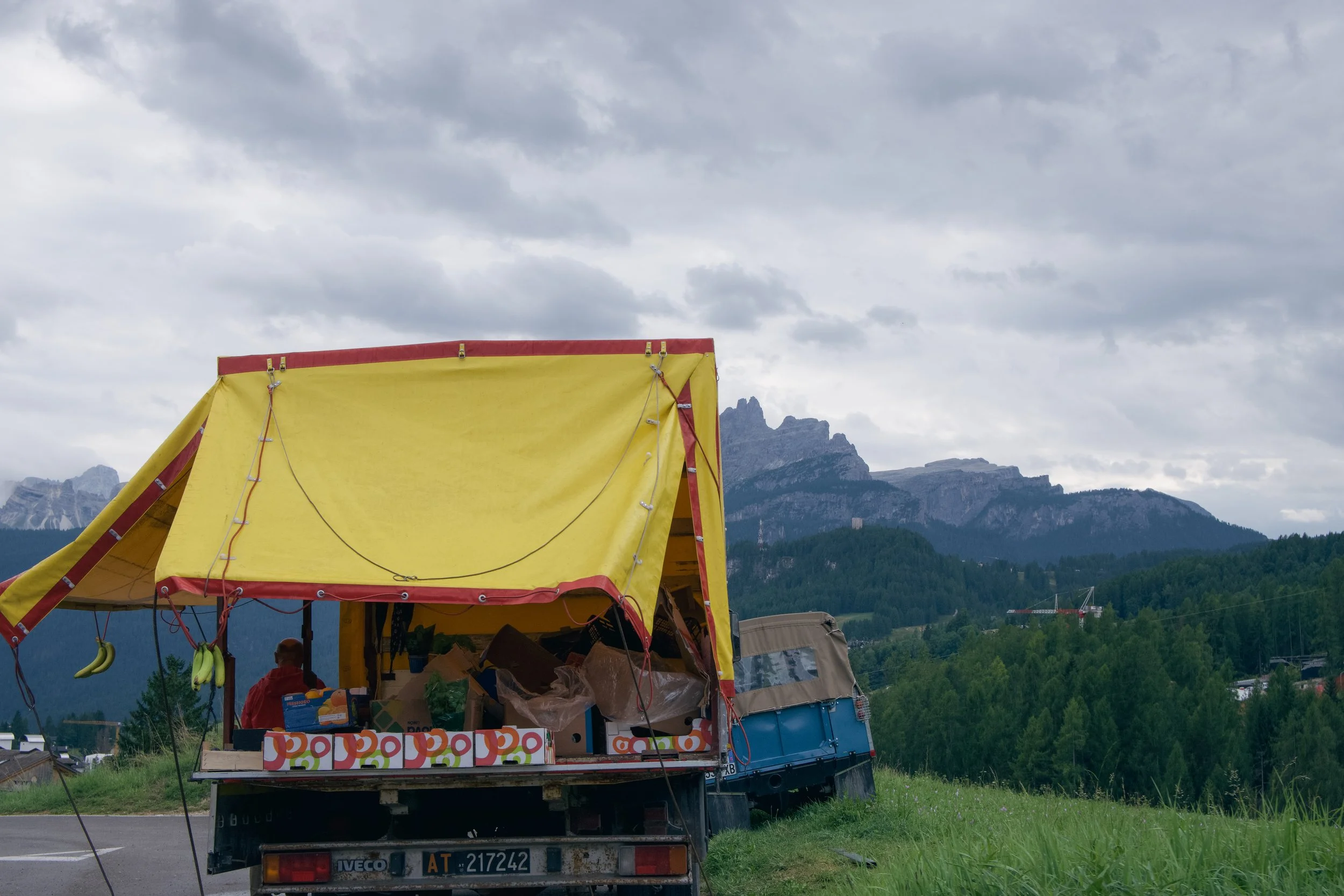
We veered past a fruit-seller situated high on a mountain pass. His quaint stand sat where the road forked and afforded just enough space to sell his produce safely. Each following day, my eye would catch sight of the bright yellow canvas tarps fastened to wood planks, then fall to the signs attached on every visible side, spray-painted “FICHI.” The cardboard boxes contained all sorts of sweet bounty, and the plainclothes man became a place marker for my mind—still stranger to these mountains. Such small details blend into pleasures out here; a way of seeing is born from being a disciple to the towering peaks.
/////
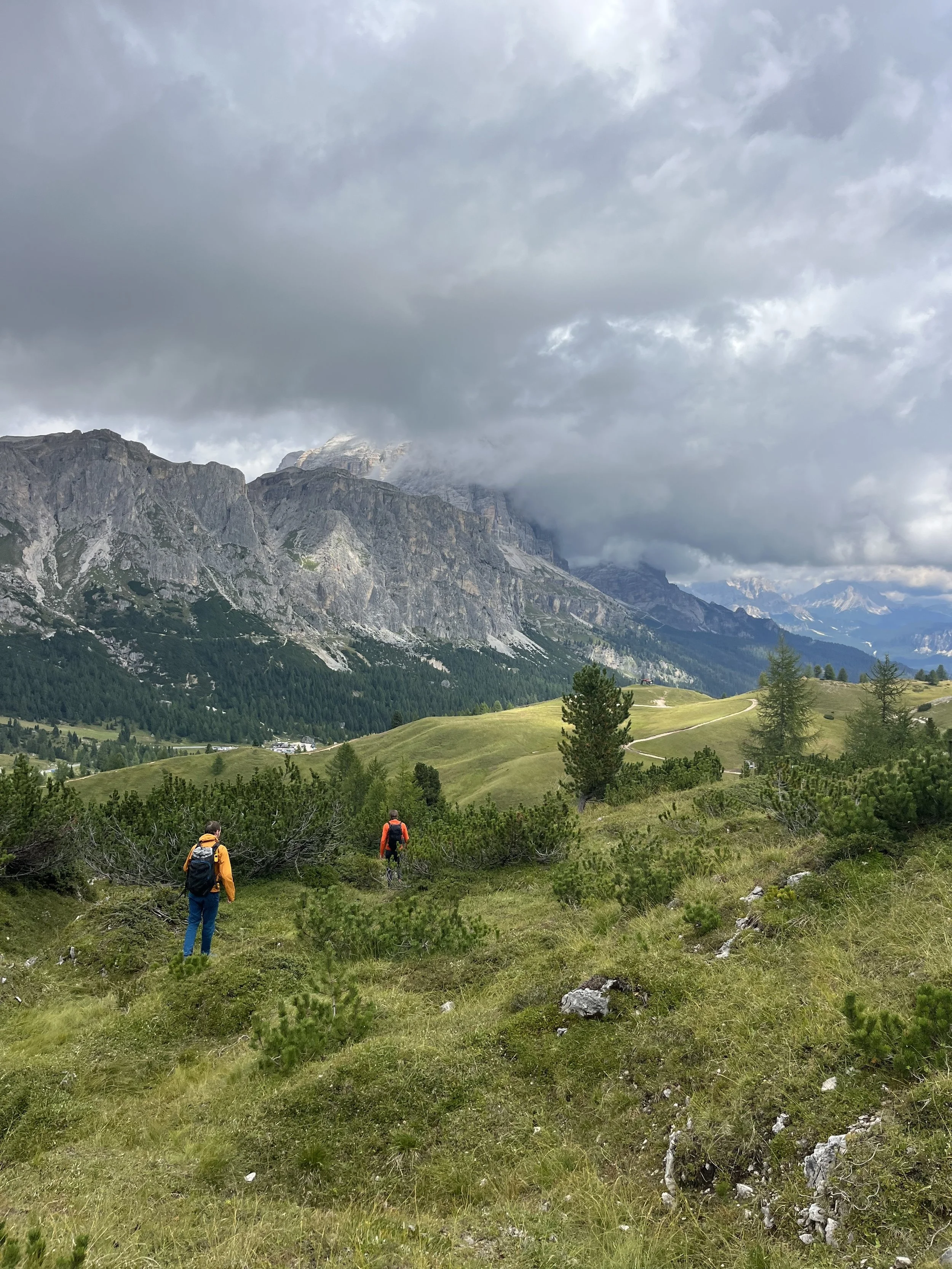
It wasn’t hard to get into the swing of things: friends; warm food; a campsite; Dutch conversations blending into English doused with limoncello; Italian music blaring from the bathroom speakers; and long days of climbing.
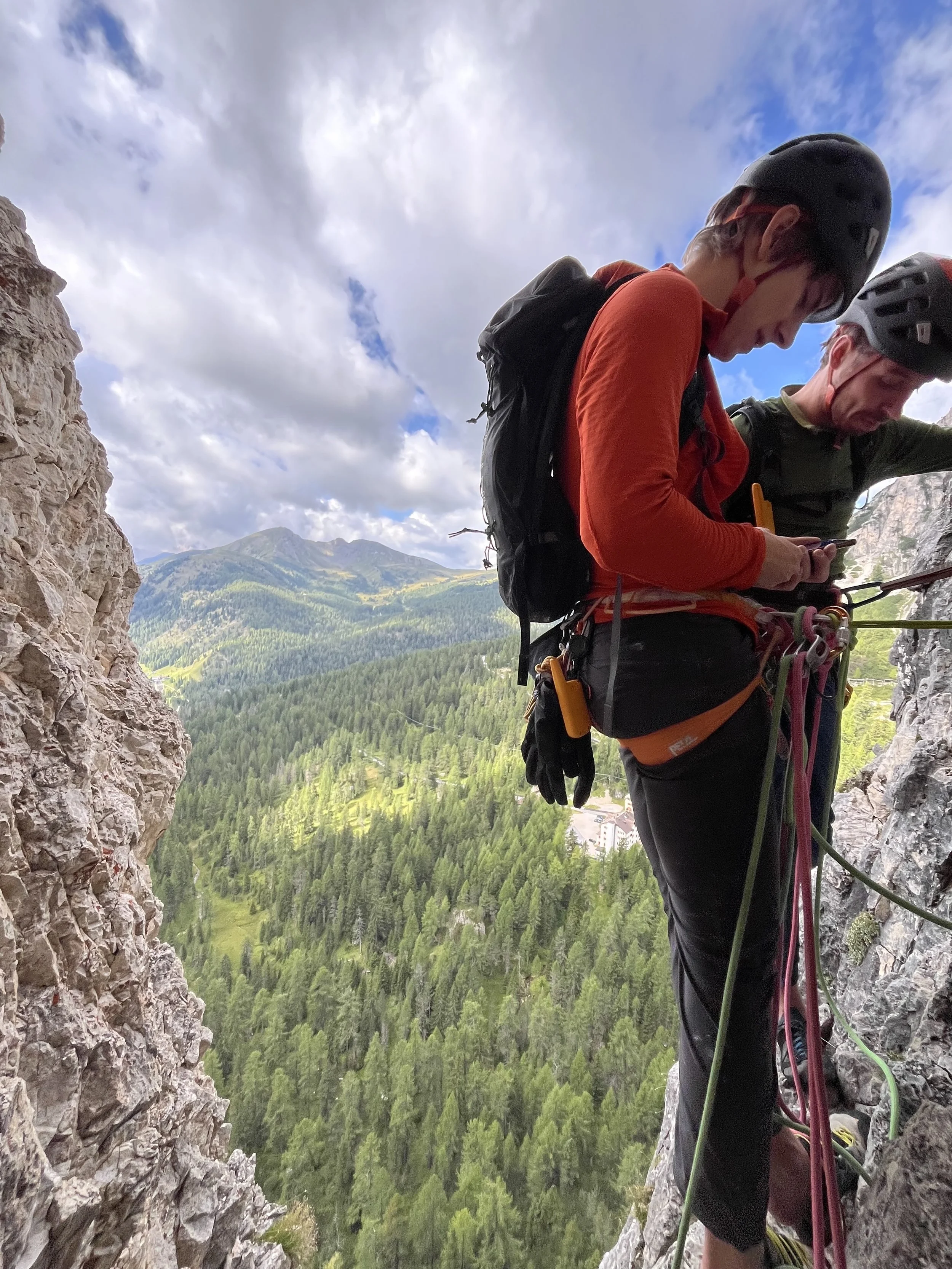
One day I was out in the province of Belluno, climbing seven pitches near Falzarego Pass with Joey and Steven, then chatting over coffee and paninis served in an old military hospital-turned hotel by a young Italian boy with wide eyes and an infectious smile.
Another day I was projecting at a sport crag called Landro Classica in Dobbiaco, trying at my limit and befriending a crew of Austrian guys whose draws hung on the sharp limestone line. By the end of afternoon, a cold German beer was placed in my chalky hands and conversation flourished.
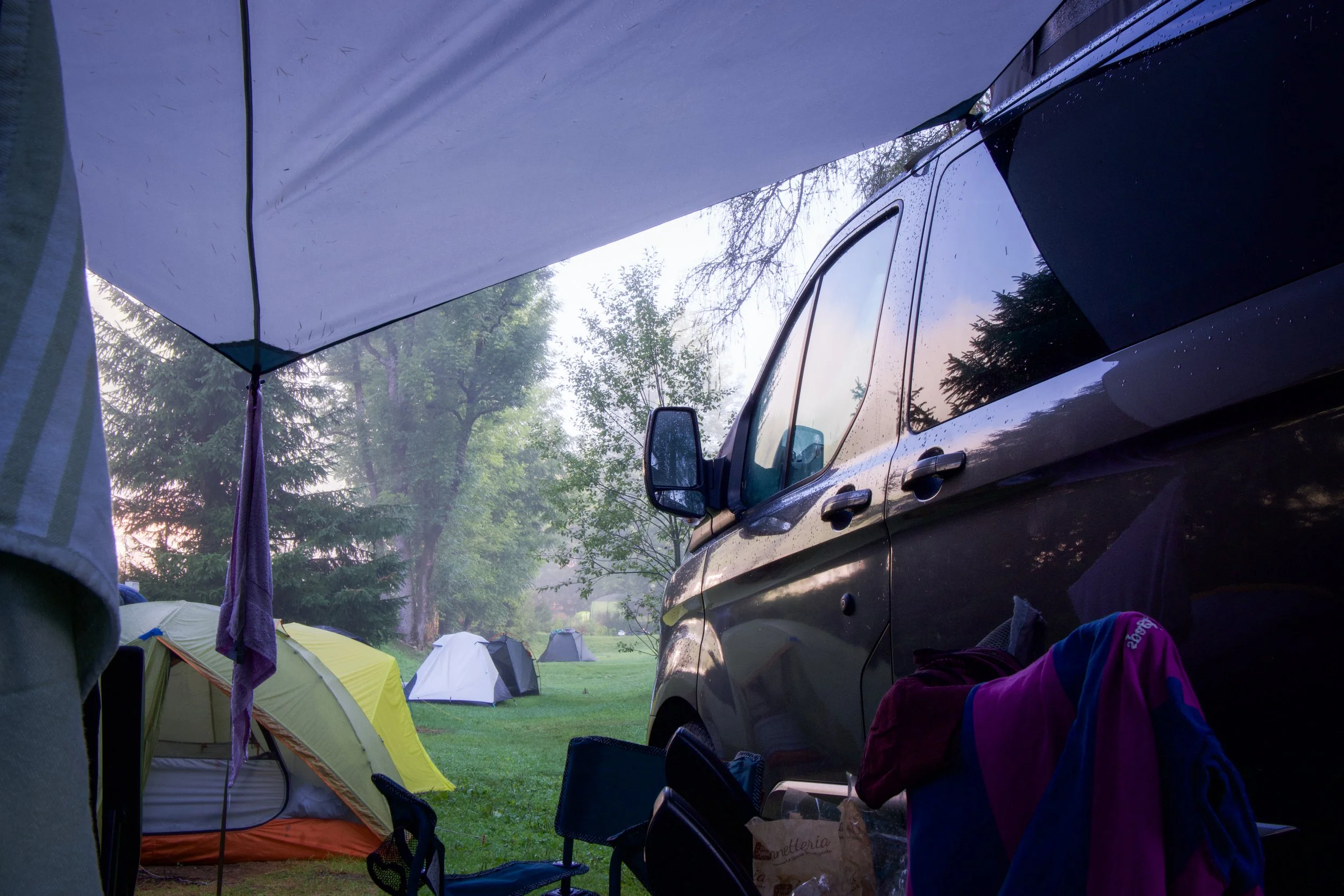
One late afternoon, the group began trickling back from their day’s adventures, maintaining spots in the circle of chairs under our tarp. A rain cloud rolling down from the higher peaks we were climbing hours prior blanketed our campsite in dimmer light and hailed down water for a long twenty minutes. We had just passed around plates and utensils strewn around the space, dinner scooped with spatulas from giant woks, slamming down on our tortillas. The rain sounded like little drums, and the sky met my seat through the gaps in the tarp. In a matter of minutes my bottom half was drenched, but the occurrence seemed so light-hearted—how fast the rain came and how soon the sky reopened and light and blue sky reigned back down upon us. In such bad weather, all conversation seemed to cease, our faces bent over our bowls of collapsing burritos.
I could never have anticipated such pure moments speeding along the Autobahn in the blue Toyota Aygo days prior.
Through the morning’s biting cold came the chiming of the 8 o’clock loud bells, ringing from a church in nearby Cortina. As I walked through the site, I indulged in the life occurring in different speeds and forms all around me: a family of four sat around a plastic table mulling silently over their breakfast; a man and his weiner dog emerging from their camper, a chair carried out by the grey-haired, bulky man, which in an instant was occupied by the silky, orange-furred pup as if that was their daily ritual; a woman lathering moisturizer on her cheeks, bent beside her car’s wing mirror; the sound of dishes being rinsed, clothes washed, teeth brushed, toilets flushed—each scene in the mosaic of the morning working to tell this place’s story.
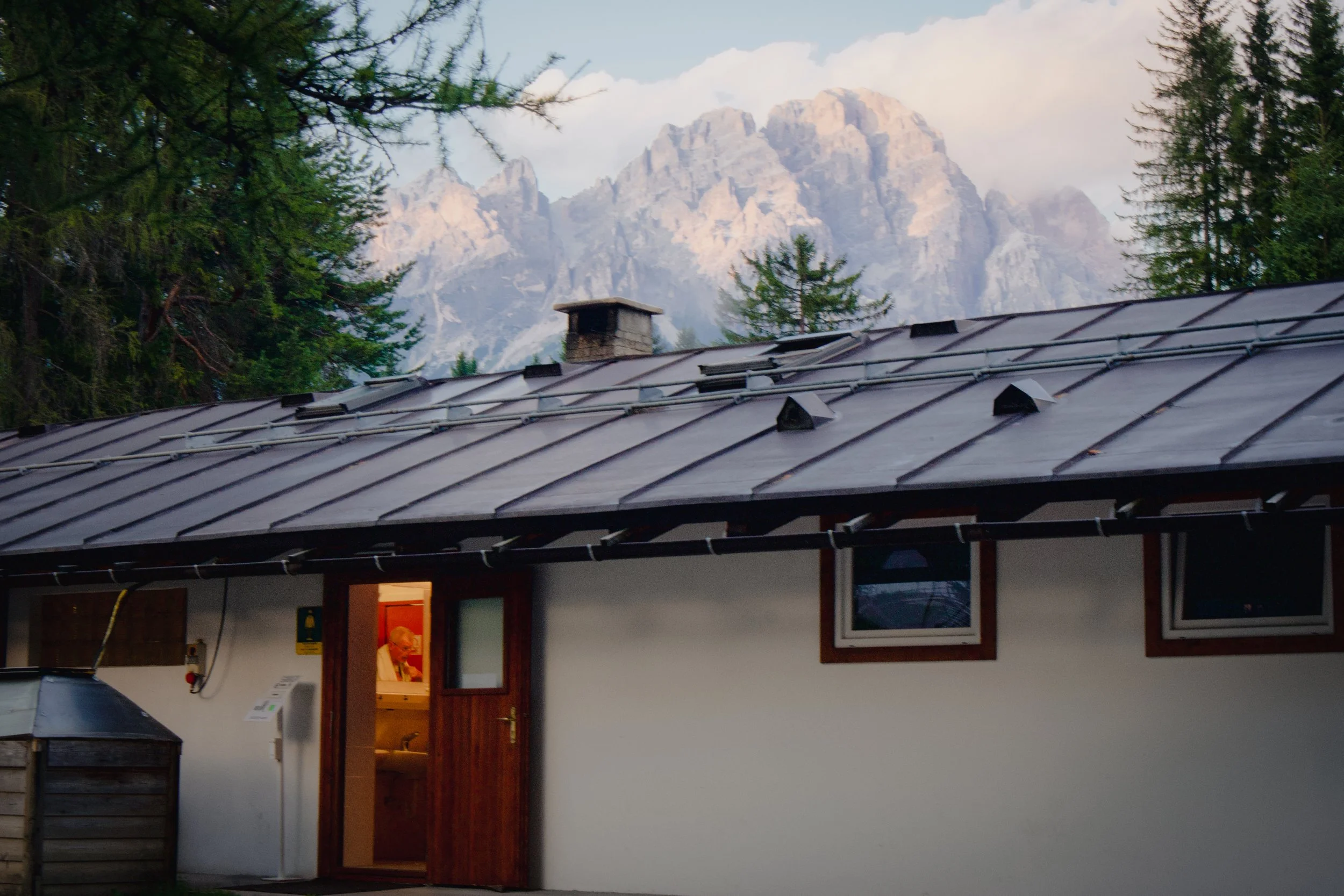
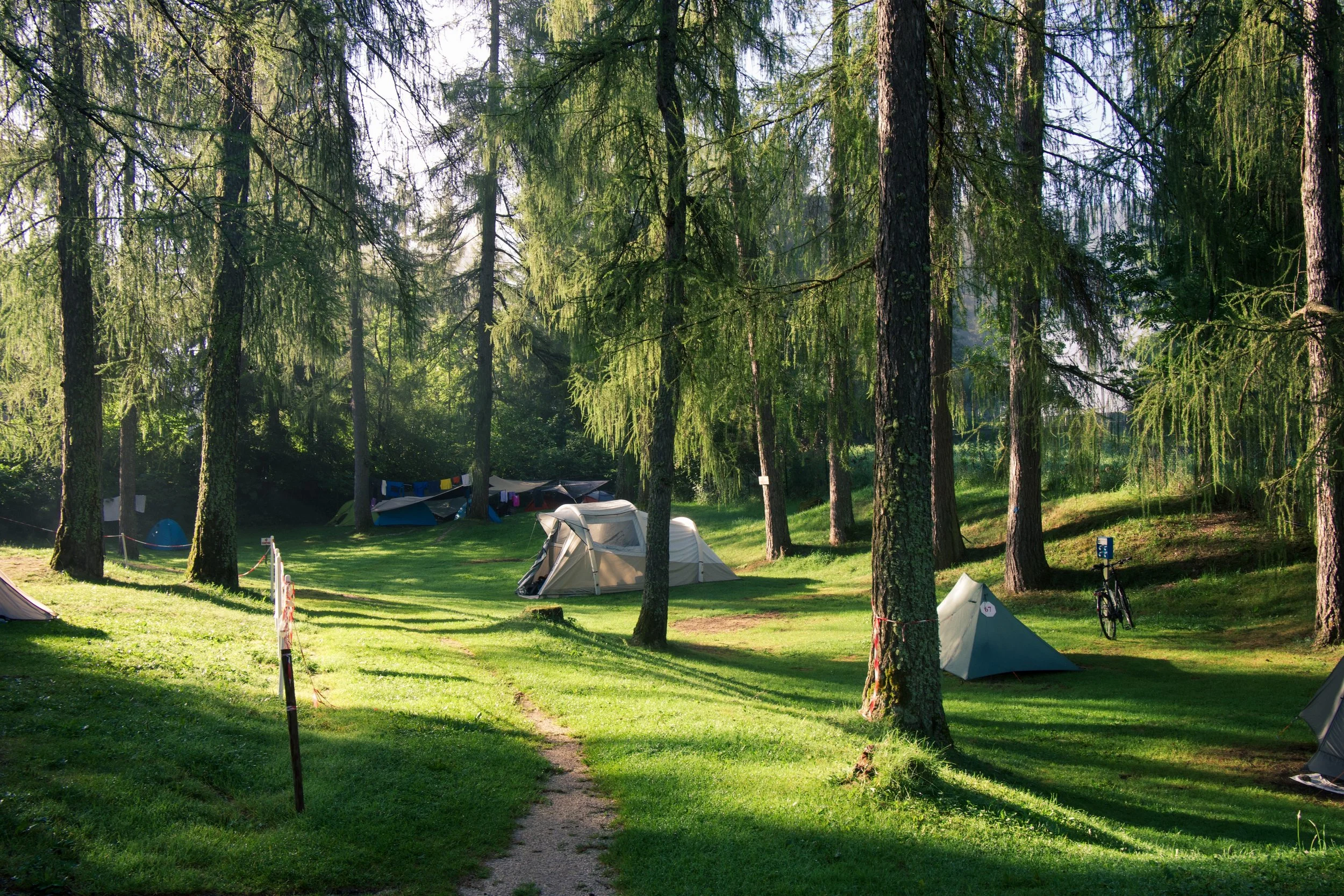
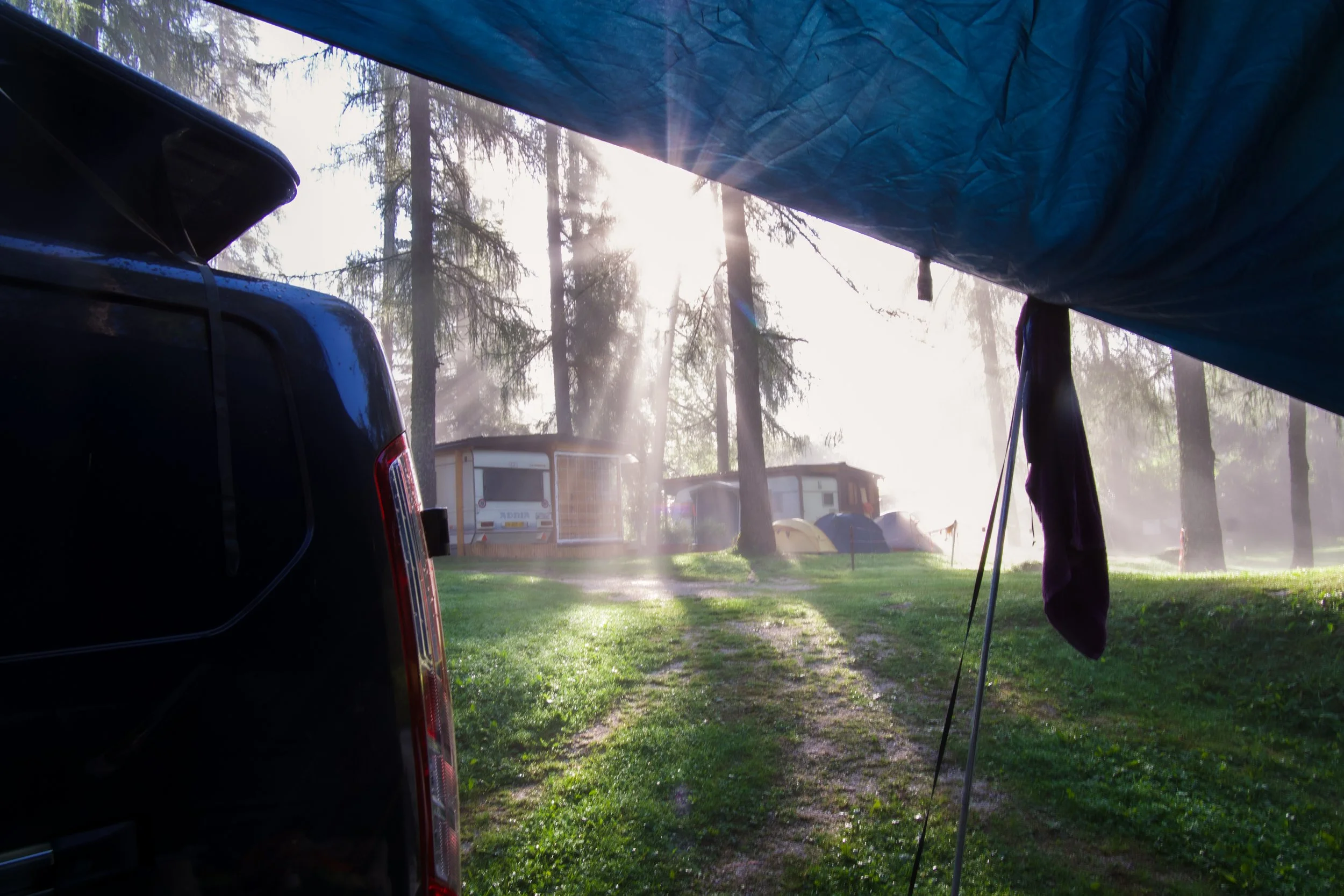
And as the pace and movement began to pick up in camp—despite my group still sound asleep—I watched from my seat in the sun the clouds unveiling Monte Pelmo and Tofana di Mezzo, two of the many mountains in view.
Soon the storm brewing would actualize, the campsite would clear out, and the peaks I grew to recognize would rise stoically behind stark white, swirling fog. We waded back out of the Alps, steering the wheel through bordering lands, rich from movement and the route we took through them.
